
MY TOP 100 CLASSICAL MUSIC FAVORITES CONTINUE BELOW. THEY ARE NUMBERED ~ BUT NOT RANKED IN ANY PARTICULAR ORDER.

|
71. WAGNER'S OVERTURE TO "RIENZI"
When I posted the 69th piece on my Top 100 list, Gottschalk's "Grand Walkaround" from the ballet "Cakewalk" (HERE), I discovered disturbing background information concerning the origins of the dance known as the cakewalk.
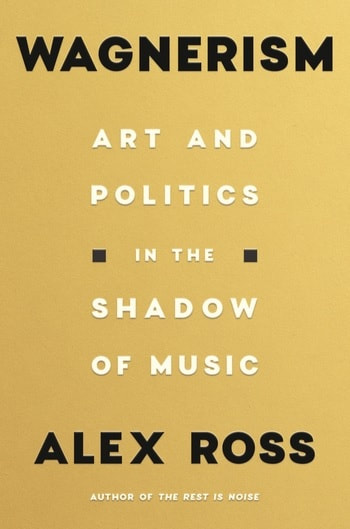
Similarly, I received Alex Ross's book "Wagnerism, Art and Politics in the Shadow of Music" for Christmas, and whoa -- I've been reading up on some disturbing background information on Richard Wagner. I'd heard about issues with Wagner in the past -- about his anti-Semitism -- but I had no idea about the degree of his anarchist beliefs and despicable ideologies. |
|
|
Sooo...does someone continue watching the films of Woody Allen when knowing of the accusations against him from his adoptive daughter Dylan Farrow? Does someone continue listening to the music of Michael Jackson when learning of the sexual-abuse allegations against him?
And what of Richard Wagner? In "Richard Wagner, Love Him or Hate Him?" (HERE), Fred Plotkin stated, "For today, I am going to address but one topic about Wagner, namely, the question that I am asked most often: 'How/why can you like him, Fred?'" I'm just 50 pages into Ross' 650-plus tome, so later I'll definitely need to revisit where I stand on all of this. |
Plotkin in his article said, "The way this question is typically phrased elicits an easy and direct answer: I don’t like Wagner, the man, though I am fascinated by the art he produced. I explore these works on their own terms, standing apart from their creator. If I were to tell you that Chopin and Renoir were anti-Semites or that Puccini and Picasso treated women horribly, would your feelings about their art change? Is it fair to those works to inject the biography of their creators when we hear or see them?"
For now, I have posted Wagner's overture to his opera "Rienzi," a piece I have loved since the first time I heard it way back in high school -- and yes, my high school years were "way back" in time. : )
For now, I have posted Wagner's overture to his opera "Rienzi," a piece I have loved since the first time I heard it way back in high school -- and yes, my high school years were "way back" in time. : )
|
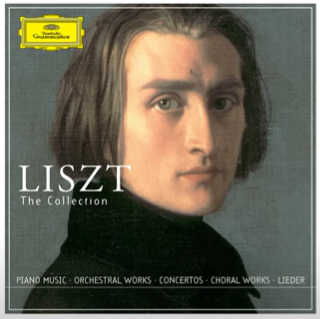
BTW: In reading the Prelude to Ross' book "Wagnerism," I also learned that Richard Wagner's second wife was none other than Cosima Liszt von Bülow, daughter of Hungarian pianist and composer Franz Liszt and Marie d'Agoult. With Wagner, she helped to found the Bayreuth Festival at which performances of Wagner's operas are presented.
And another BTW: The conductor at the premiere of Wagner's opera "Tristan and Isolde" in 1865 was Cosima's first (and current-at-that-time) husband Hans von Bülow -- and she had given birth in April of that year to a daughter, named Isolde -- a child not of Bülow but of Wagner. |
|
Above on the right: Franz Liszt's "Fantasy on Themes from "Rienzi."
|
|
72. TRIUMPHAL MARCH FROM AIDA BY GIUSEPPE VERDI
Here's another song I've loved since my exposure to it way back in my high school band days. It's a majestic ceremonial march -- so much so that many schools use it in their graduation ceremonies.
An article on Wikipedia states, "Many composers have written a triumphal march, with maybe the best known one being by Italian opera composer, Giuseppe Verdi for his 1871 grand opera, "Aida" where, in the second act, Radames leads the Egyptian army on its return following their victory over the Ethiopians. The triumphal scene gives directors the opportunity for elaborate spectacle typical of the grand opera of the period in the nineteenth century." |
|
The YouTube video above on the left is an instrumental version of the march, and the video on the right show the march as performed in Act II of the opera. Below left: the march as a piano duet (I have a piano version of the song, but not a duet). Below right: The march on a pipe organ.
|
Just FYI: One person commented on the video of the march on the organ, "I had to stop what I was doing and listen to this." If you get a chance, stop and listen. : ) |
|
Also, when you get a chance, listen the the march in the video at the right. Danny Kaye is the conductor, and he leads the orchestra in a most unusual way -- he faces the audience so that they can experience what really goes on between a conductor and an orchestra! |
|
|
73. GEORGE GERSHWIN'S PIANO CONCERTO IN F
Conductor Walter Damrosch attended "An Experiment in Modern Music" in New York City in February 1924 when George Gershwin premiered "Rhapsody in Blue," a piece commissioned by the concert's organizer, bandleader Paul Whiteman. Damrosch then commissioned Gershwin to compose a concerto for solo piano and orchestra.
From an article on Wikipedia, "The "Concerto in F" shows considerable development in Gershwin's compositional technique, particularly because he orchestrated the entire work himself, unlike the "Rhapsody in Blue" which was scored by Ferde Grofé, Paul Whiteman's section pianist and principal orchestrator." |
|
|
|
According to the person who posted the video on the left on YouTube, the video is of the "1st Recording/Original Version - Gershwin: Concerto in F."
At the right: The Concerto in F played on two pianos. |
|
|
|
74. TCHAIKOVSKY'S SERENADE FOR STRINGS IN C
Tchaikovsky's "Serenade for Strings" has 4 movements, and all four are beautiful:
|
|
On the second page of the score, Tchaikovsky wrote, "The larger number of players in the string orchestra, the more this shall be in accordance with the author's wishes." So true -- because the more string players, the more lush the sound!
|
|
|
75. CLAIR DE LUNE BY CLAUDE DEBUSSY
Who doesn't love "Clair de Lune"? It's such a beautiful song.
"Clair de Lune" is the third and most famous movement of "Suite Bergamasque" by DeBussy. He began composing it around 1890, at the age of 28, but significantly revised it just before its 1905 publication.
|
Above: Clair de Lune Far left: Suite Bergamasque Left: The end of the film "Ocean's Eleven" featured Debussy's "Clair de Lune." |
What I did not know until today -- when I looked up information for this post -- was that DeBussy's "Clair de Lune" was inspired by a poem of the same name by French poet Paul Verlaine. Here is the poem:
|
Votre âme est un paysage choisi
Que vont charmant masques et bergamasques Jouant du luth et dansant et quasi Tristes sous leurs déguisements fantasques. Tout en chantant sur le mode mineur L'amour vainqueur et la vie opportune Ils n'ont pas l'air de croire à leur bonheur Et leur chanson se mêle au clair de lune, Au calme clair de lune triste et beau, Qui fait rêver les oiseaux dans les arbres Et sangloter d'extase les jets d'eau, Les grands jets d'eau sveltes parmi les marbres. |
Your soul is a chosen landscape
Where charming masquerades and dancers are promenading, Playing the lute and dancing, and almost Sad beneath their fantastic disguises. While singing in a minor key Of victorious love, and the pleasant life They seem not to believe in their own happiness And their song blends with the light of the moon, With the sad and beautiful light of the moon, Which sets the birds in the trees dreaming, And makes the fountains sob with ecstasy, The slender water streams among the marble statues. |
Verlaine's poem was also set to music by Gabriel Fauré (below left), Louis Vierne (below center) and Josef Szulc (below right).
|
|
|
|
|
|
76. OVERTURE TO LA GAZZA LADRA BY ROSSINI
The overture to Rossini's opera "La Gazza Ladra" ("The Thieving Magpie") is yet another example of a song I've loved since my days back in high school band.
According to Wikipedia, "'The Thieving Magpie' is best known for the overture, which is musically notable for its use of snare drums" (and speaking of snare drums, see my post #25 for Ravel's "Bolero," HERE). |
|
An animated short film called "La Gazza Ladra" (at the right) was made in 1964 by Giulio Gianini and Emanuele Luzzati using the overture as the soundtrack. It was nominated for an Academy Award and won the first Grand Prix of the Melbourne International Film Festival. This overture makes a few appearances in Stanley Kubrick's 1971 film "A Clockwork Orange," and it also appears during the famous baby-switching scene in Sergio Leone's "Once Upon a Time in America." |
|
|
|
The overture has also been used for many television and radio advertisements, including the award winning "color like no other" 2006 British TV commercial for the Sony "Bravia" TV, featuring spectacular paint explosions (at the left). |
|
77. THE FLOWER DUET (DUO DES FLEURS) BY LÉO DELIBES
While I'm not a huge fan of opera, there are various opera tunes and overtures sprinkled throughout my Top 100 list. There's even one complete opera on my list, "Carmen" by Georges Bizet, #35 (HERE).
Of course, I had to include "The Flower Duet" from Léo Delibes' opera “Lakmé.” The song – one of the most beautiful and recognizable arias in all of opera – is sung by the characters Lakmé, daughter of a Brahmin priest, and her servant Mallika, as they go to gather flowers by a river. |
|
|
|
This duet has been heard many films and TV shows and advertisements, including “Meet the Parents,” “True Romance,” and “The Simpsons.”
At the left: The Flower Duet as used in "The Simpsons" At the right: The duet used in an unusual British Airways advertisement. |
|
|
|
78. TCHAIKOVSKY'S VIOLIN CONCERTO IN D MAJOR
I've always loved Tchaikovsky's violin concerto -- even before Bill Conti plagiarized it for his score to the movie "The Right Stuff."
|
Most sites about the score to "The Right Stuff" do not mention Tchaikovsky at all. I did find this on the IMDB "Trivia" page for the movie: "In addition to 'The Planets,' the music score features other classical music pieces favored by Kaufman, such as Pyotr Ilyich Tchaikovsky's Violin Concerto in D major....In spite of the film's heavy use of music from various sources, Conti would go on to win the Oscar for Best Original Score."
|
Monty Python satirized the concerto in their "Royal Festival Hall" Concert" sketch on "Another Monty Python Record," in which violinist Emile Gilbert wrecked violins while overplaying solo passages, eventually provoking violent conflicts in the orchestra. To listen to the Monty Python sketch, listen at 38:14 on the video at the right. |
|
|
79. MENDELSSOHN'S VIOLIN CONCERTO IN E MINOR Mendelssohn's concerto was well received when it premiered in 1845, and it soon became regarded as one of the greatest violin concertos of all time -- and I can understand why. The work opens with an almost immediate entry of the violin with a evocative melody in E minor that plays repeatedly throughout the piece, and it grabs you from the start.
|
|
|
|
In reading about this concerto for this post, I discovered that Mendelssohn also wrote a Concerto for Violin and String Orchestra in D Minor (at the left) between 1821 and 1823, when he was 13 years old (about "the same time that he produced his twelve string symphonies"). Info HERE.
SAY WHAT!? : ) 13 years old!? Good grief -- I think I was still watching Saturday morning cartoons when I was 12 to 14 years old! |
Below: Renditions of the Mendelssohn Violin Concerto in E Minor by sax ensemble, accordion, and flute.
|
|
|
|
|
|
80. BEETHOVEN'S VIOLIN CONCERTO
|
CLICK THE BUTTONS BELOW TO SEE OTHER SELECTIONS IN MY TOP 100.
Pages for songs 81- 90 and 91 - 100 are coming soon!
